eBooks
92 Books foundWelcome to the IUSEN Public Domain Literature Library
This catalogue offers 92 works on education, teaching, and learning—all drawn from the public domain and freely accessible. The collection spans practical classroom manuals, theoretical treatises, historical surveys, and firsthand accounts of school reform. Readers can browse by category, search by keyword, or explore the full list of titles.
Browsing the Catalogue
The catalogue is organized into three categories, each grouping works that share a common focus. From the archive page, you can click any category name to see its guide and full list of books. Each book record includes the title, author(s), publisher, keywords, a target-reader note, and a catalogue note that explains the work’s content and context. Use the internal links to open individual edition pages.
Book-Record Information
Every entry contains the title as supplied by Project Gutenberg, the author’s name and lifespan where known, the original publisher, subject keywords, and a descriptive note prepared by the editor. The target-reader field indicates the intended audience—generally readers of public-domain and historical texts. These records are designed to help you decide which works merit closer attention.
Source Attribution
All texts in this catalogue originate from Project Gutenberg, a trusted source for digitized public-domain literature. Each work is presented as a reader’s guide or edition insight, not as a full-text reproduction. The catalogue notes are original editorial material.
Categories
The three categories are Teaching Methods, Schools Learning, and Educational Theory. The first focuses on pedagogical techniques, the second on schools and social contexts, and the third on the philosophy and psychology of education. Each category guide below recommends three representative works.
Three Practical Reading Paths
- For the history of teaching methods: Begin with How to Teach Phonics (1916), then Spontaneous Activity in Education by Maria Montessori, and finally Émile; Or, Concerning Education; Extracts by Rousseau. This path traces the shift from systematic drill to child-centered pedagogy.
- For schools in their social setting: Start with Health Work in the Public Schools, a 1915 survey of medical inspection in Cleveland; then read Moonlight Schools for the Emancipation of Adult Illiterates about Kentucky literacy campaigns; and finish with My Schools and Schoolmasters by Hugh Miller, a memoir of self-education in Scotland.
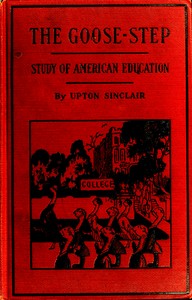
- For educational philosophy and psychology: Read John Dewey’s Moral Principles in Education, then Maria Montessori’s The Montessori Method, and finally Upton Sinclair’s The Goose-step: A Study of American Education. This sequence moves from ethical foundations to scientific pedagogy to a critique of institutional power.
- Featured
- Featured