
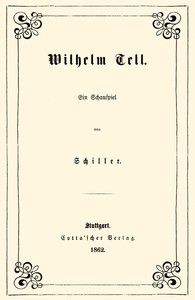
Wilhelm Tell : Ein Schauspiel by Friedrich Schiller
Let's set the scene: It's the early 1300s in the mountain valleys of Switzerland, which are under the thumb of the Austrian Habsburgs. The local governors, like the nasty Gessler, love to flaunt their power and make life miserable for the Swiss farmers and hunters. The story follows Wilhelm Tell, a quiet, skilled hunter who just wants to be left alone with his family. But when Gessler forces everyone to bow to a hat placed on a pole as a symbol of his authority, Tell refuses. As punishment, Gessler devises a cruel game: Tell must use his crossbow to shoot an apple off his son Walter's head. If he succeeds, he goes free. If he fails or refuses, they both die.
The Story
Tell makes the impossible shot, saving his son. But Gessler notices Tell had a second arrow hidden. When asked what it was for, Tell admits it was meant for Gessler if the first arrow had harmed his child. For this threat, Tell is arrested. On a boat trip across Lake Lucerne, a storm hits, and only Tell's expert knowledge of the lake can save them. He's freed to steer the boat, seizes his chance, and escapes. Meanwhile, other Swiss patriots from three cantons (Uri, Schwyz, and Unterwalden) are secretly swearing an oath to rebel. Tell's personal quest for justice and the people's political struggle converge in a dramatic and fateful way.
Why You Should Read It
You might think a 200-year-old play about Swiss history would be a slog. I thought so too, but I was wrong. Schiller makes it thrilling. Tell is the ultimate reluctant hero. He doesn't want to be a revolutionary; he's pushed into it by a system that attacks his family. That makes his actions so much more powerful. The play isn't just about one hero, though. Some of the best scenes are the secret meetings where farmers and townsfolk argue about the right way to fight back. It shows freedom as a group effort. The themes of personal conscience versus public duty, and when a citizen has the right to resist, hit hard even today.
Final Verdict
This book is perfect for anyone who loves a great underdog story with high stakes. If you enjoy historical fiction, political dramas, or tales about ordinary people doing extraordinary things, you'll find a lot to love here. It's also a fantastic pick for book clubs – the ethical questions it raises are guaranteed to start a lively discussion. Don't let the 'classic play' label scare you off. Wilhelm Tell is a surprisingly accessible and gripping story about the shot heard 'round the Alps, and the courage it takes to say 'enough.'
This work has been identified as being free of known copyright restrictions. Preserving history for future generations.
Noah Young
1 year agoI was skeptical at first, but the emotional weight of the story is balanced perfectly. Absolutely essential reading.
Barbara Torres
1 year agoHonestly, the storytelling feels authentic and emotionally grounded. Absolutely essential reading.
Elizabeth Brown
1 year agoBeautifully written.
Elizabeth Harris
1 year agoAfter finishing this book, the clarity of the writing makes this accessible. Exactly what I needed.


Richard Thompson
9 months agoHaving followed this topic for years, I can say that the bibliography and references suggest a high level of research and authority. I’ll definitely be revisiting some of these chapters again soon.